Choosing a Great Culture Vessel
When you think about tissue culture, the vessel you use to grow your plants probably isn't the first thing that comes to mind.
For orchids, we now believe it may be one of the most important pieces of equipment in the entire process.
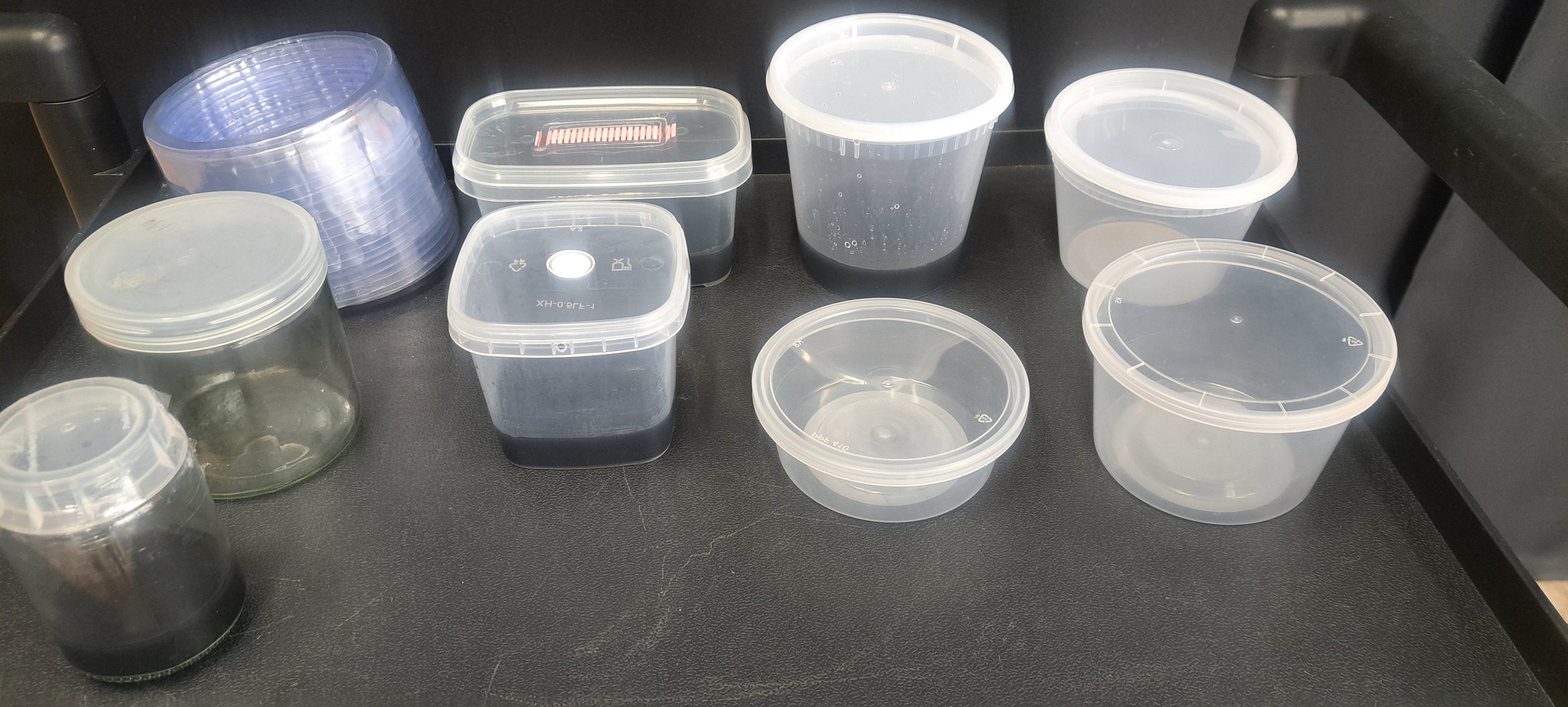
That sounds like an exaggeration until you consider how long an orchid can spend in culture, and how many replates are involved in the process.
Leafy plants move through tissue culture relatively quickly. A container that does well for 6 or 12 weeks may perform perfectly well. Orchids however can spend months in a flask, and still may not be very big when that first year is over. Some cultures can remain in the lab for a year or more.
That changes the requirements for the container considerably.
A culture vessel isn't just something that holds agar and plants. For an orchid, it can be the environment the plant lives in during the most vulnerable stage of life.
Warps, Bends and Cracks
The first step in the production process: the vessel has to survive sterilization.
Unless a container arrives pre-sterilized, we have to decontaminate it before putting a culture inside. That generally means exposing it to high-pressure steam at temperatures around 121°C for an extended period. It's a brutal environment for plastic.
Polypropylene is commonly used because it has relatively good resistance to those temperatures, but "autoclavable" doesn't necessarily mean "will come out of the autoclave exactly the way it went in."
We've seen the kinds of problems that can develop:
cups that warp or deform
lids that become too tight or too loose
rims that no longer cleanly fit a lid
plastic that becomes brittle
vessels that are difficult to close without squeezing or pinching them
That last one sounds like a minor inconvenience until you're closing hundreds of containers.
If you have to pinch the cup, wrestle the lid into place, or worry that the container might collapse or crack while you're closing it, that's not just an annoyance. It is a reliability problem.
And then you have to wonder how the vessel will perform under lights in culture for months.
Lids Too!
One of the things that has surprised us is how difficult it can be to consistently source a vessel where you can be confident about the material of both the cup and the lid.
It is relatively easy to find containers described as polypropylene. It is just as important to know what kind of material the lid is made from, and suppliers often use different materials across cups and lids.
A polypropylene cup paired with a lid made of material that doesn't tolerate your sterilization process creates an obvious problem: the part that actually has to seal the culture may not survive the same conditions as the cup.
We've found this to be surprisingly difficult to source reliably. And just when you think you’ve found a great container, getting it shipped consistently over time can be challenging. What shipped from your supplier last time may not be the same material that is shipped next time.
For a hobbyist working with a few dozen vessels, that's frustrating.
For a commercial lab, it's a production problem.
If the vessel you received last month worked perfectly but the next shipment behaves differently in the autoclave, you suddenly have another variable in a process where you already have plenty of them.
Time in the lab is a problem
Sterilization isn't the only environmental stress a culture vessel has to endure.
A vessel that spends six weeks in culture has a limited number of opportunities to experience the various environmental conditions in a lab, and you can deliver to customers without ever experiencing problems with long term lab culture.
An orchid that spends twelve months in that vessel experiences a multitude of various issues in a lab.
A vessel that spends six weeks in culture has relatively few opportunities to experience the environmental fluctuations of a lab. You might be able to fill it, sterilize it, and ship it without ever discovering a problem.
An orchid that spends twelve months in that vessel gives you a lot more opportunities to find one.
Flasks sitting directly beneath heating or air-conditioning outflows can experience surprisingly large temperature swings. We've had shelves directly under an outflow develop problems while the shelf immediately below remains fine. We can't say that temperature alone is responsible for every one of these failures, but the pattern is consistent enough that we now pay attention to where we place long-term cultures.
We have a hypothesis that temperature swings create pressure differences inside and outside the vessel, causing faster air exchange and potentially allowing contaminants to enter with that new air. We haven't directly measured this in our cultures, so this is still a hypothesis—but it is one reason we're interested in how much and how quickly a vessel can exchange air.
That's part of the tradeoff we're making with a culture vessel: we want to protect the culture from contamination, but we also need the culture to have an appropriate gaseous environment.
We also have hypotheses about whether laboratory mites may be responsible for some of the contamination we've seen. This is another possibility we've considered while trying to understand some of the contamination we've encountered. While this cannot be directly controlled with a container choice, it does make you think about how to manage older flasks in your lab, and how a durable, predictable vessel can give you more confidence when diagnosing contamination issues.
But what is abundantly clear is that the longer a flask sits in the lab, the more opportunities there are for it to encounter some sort of contamination vector.
How much air exchange is enough?
Obviously, a completely open container isn't appropriate for sterile culture. The more opportunity you give the outside environment to enter, the more opportunities you give contamination to enter with it.
Sealed vessels, in our experience—where we've used lids screwed on very, very tight—haven't yielded germination as successfully as vessels where we know air exchange is present. This gives us reasonable suspicion that growth and germination is stunted if there isn’t at least some limited gas exchange.
The goal is controlled gas exchange: enough exchange to support the culture while still maintaining an effective barrier against contamination.
That makes the design of the vessel—and particularly the way gas exchange occurs—important.
A vessel can be described as "sealed" without necessarily being completely isolated from the atmosphere. Likewise, a vessel can have some permeability without providing the kind of controlled gas exchange that a growing culture actually needs.
Size, Saleability and Cost
The best size container depends on what you grow, and how big your plants are expected to be when delivered. Orchids can live in these vessels for over a year, so the vessel needs to carry enough nutrition to take them all the way to shipping.
A large container can be efficient if you're growing a large number of plants together, or are culturing large growing plants, but you can’t fit as many on a shelf, or pack as many in a box, and retail customers may not want to pay for that many plants.
More small containers can fit on a lit shelf, and you can pack more in a shipped box, but you are sending fewer plants per unit. Per plant economics will matter to your customers, and how much time and media you spend on a per-flask basis.
Does the customer actually want to receive 25 plants in one container?
What about 40? Do you want to spend time putting 40 units in a flask when the customer only wants to pay for 20?
The vessel needs to make sense for the entire production chain, not just for the person filling it.
We have to think about how much material can be efficiently cultured, how much space it takes on a shelf, how it moves through the lab, and what the final unit looks like when it reaches a grower.
A culture vessel is simultaneously a piece of laboratory equipment, a growing environment, an inventory unit, and eventually a package.
Shape matters!
Are the vessels able to be nested together? Are they square or round?
If you're working with glass vessels, you may have to fill them before sterilization and then deal with the practical limits of sterilizing only a dozen or two at a time. If you have an order for 1000 or 5000 plants, this becomes a terrible time and labor issue.
Plastic vessels can make that process considerably easier—but only if the way they're packaged works with the sterilization process.
We've encountered tightly nested stacks where the vessels can effectively lock together during pressure cooking. When air is trapped between tightly packed containers and the temperature and pressure change, the vessels can deform or create enough suction that separating them afterward becomes an exercise in patience.
That's more than an annoyance. If you have to force the vessels apart, you risk damaging them, and every additional handling step creates another opportunity for contamination. It also matters to us because we like to sterilize our media for longer than we want to subject the vessels themselves to the sterilization process.
Again, these aren't problems you'll necessarily discover by looking at a product catalog. You think you are optimizing for cost, or for size, or for labor efficiency, until you run thousands of vessels through a lab and discover some completely different issue at play.
Square vessels can be more efficient on a shelf, while round vessels can leave significant gaps, reducing valuable shelf space.
Prioritize mothers & spreads
Not all cultures are equally consequential. A contaminated final flask is a problem.
But a contaminated mother or spread is a much bigger problem simply because there are thousands of plants to throw away instead of the few you plate on to a final.
A mother culture can look perfectly fine while carrying contamination. Then you replate and that contamination is multiplied. Suddenly the material from one unknowingly problematic vessel has been divided into 15 more cultures and wasted your time and materials.
Making sure your mother / spread vessels limit opportunities for contamination is a top priority.
This is why we increasingly think about culture vessels not simply in terms of whether they "work," but whether they provide enough reliability to build a production system around them.
The vessel affects labor, material costs, contamination rates, culture quality, shelf space, handling time, and ultimately how much confidence you have in the material moving through the lab.
That makes the humble culture vessel a surprisingly important part of the operation.
TLDR what makes a great culture vessel?
A good vessel needs to:
survive sterilization without significant deformation
maintain a reliable seal
use appropriate material for both the container and lid
tolerate long periods under culture conditions
provide an appropriate level of gas exchange
resist the environmental fluctuations that come with long-term culture
be practical to handle in the quantities your lab requires
be available consistently from the supplier
make sense for the size and quantity of plants being cultured
work for the person receiving the finished flask, not just the person producing it
be affordable
That's a much higher bar than simply finding a container labeled "autoclavable."
And orchids force us to care about that higher bar because they simply don't hurry.
How we are now approaching culture vessels
Finding a vessel that checks all of these boxes has been a challenge for us.
We've experimented with different approaches for both our long-term cultures and, especially, our mother and spread cultures. We're taking a new approach to the culture vessel with the goal of improving reliability throughout the process—not just for the flasks that sit in the lab for long periods, but for the nursery stages where we're managing germinations and spreads.
We aren't going to claim that we've solved the culture-vessel problem. We're still evaluating how the new approach performs over time.
But we've learned enough to know that this isn't a trivial piece of laboratory equipment.
A reliable vessel makes it easier to scale. It makes the workflow more predictable. It reduces one more source of variability in a process where there are already plenty.
And when you're growing an orchid that may spend a year inside that vessel, reliability matters.
